1. Industry Trends
The global gaming headset industry is undergoing a structural transformation driven by evolving user expectations, digital entertainment growth, and the expansion of immersive audio experiences.
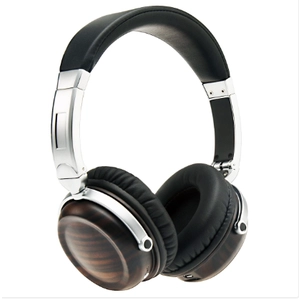
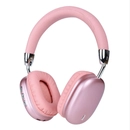
One of the most important trends is the shift toward experience-driven audio consumption. Gaming headsets are no longer positioned only as competitive gaming accessories. They are increasingly used for streaming, online communication, content creation, and daily entertainment. As a result, users now expect devices that combine high-quality sound performance, comfort, and lifestyle-oriented design.
Technical expectations have also become more standardized across markets. Products featuring 50mm high-performance drivers, 20Hz–20kHz frequency response, and omnidirectional or ENC noise-reduction microphones are now widely adopted across mid-range and entry-level segments. At the same time, ergonomic lightweight structures and durable ABS materials remain essential for long-term wear comfort.
Another major trend is the influence of short-form video platforms such as TikTok, YouTube Shorts, and Instagram Reels. These platforms significantly accelerate product discovery and purchasing behavior. Gaming headsets with strong visual identity, RGB lighting effects, and demonstration-friendly features tend to perform better in social commerce environments.
From a global perspective, the market is becoming increasingly segmented. Mature regions such as Europe, Japan, South Korea, and Australia prioritize stability, acoustic precision, and compliance standards. Meanwhile, emerging markets focus more on affordability and multifunctional performance. This dual-market structure creates broader opportunities for OEM/ODM manufacturing collaboration.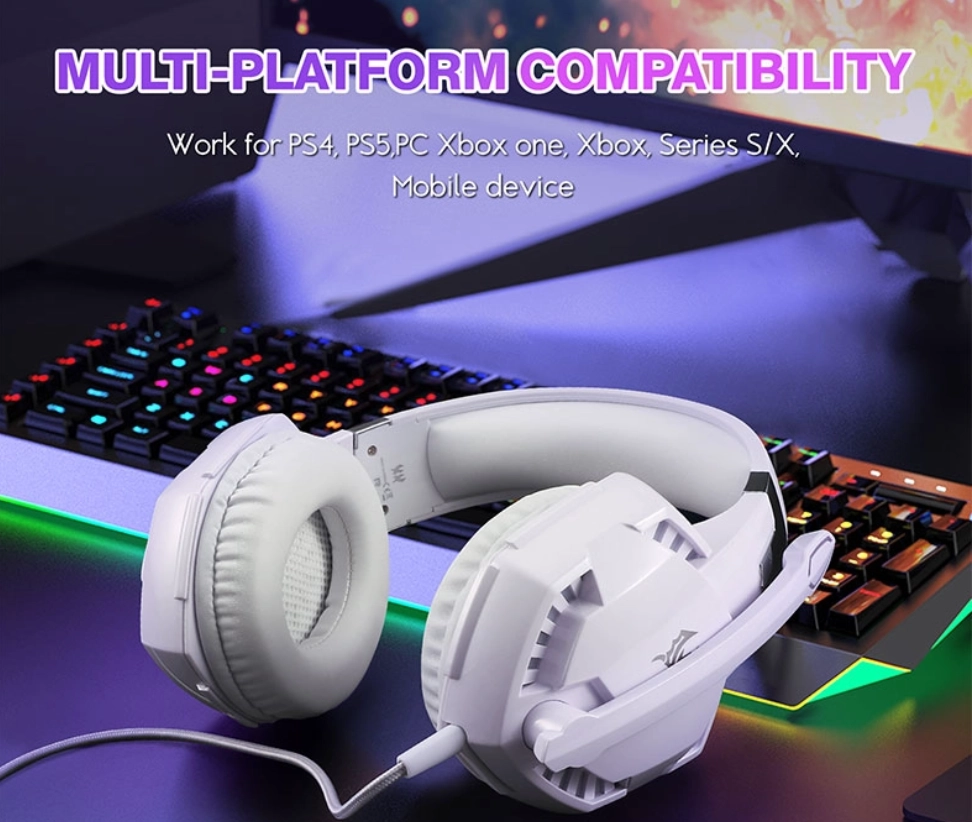
2. Market Pain Points
Despite strong market expansion, the gaming headset industry continues to face several structural challenges.
The first issue is serious product homogenization. Many products share similar configurations such as 50mm drivers and standard omnidirectional microphones, making it difficult for brands to differentiate based solely on specifications.
Secondly, the industry faces intense price competition. With the expansion of global supply chains, especially in Asia, pricing pressure has increased significantly. This has compressed profit margins for both brands and distributors.
Another challenge is the lack of meaningful product innovation. While incremental improvements exist, many products still rely on conventional designs and limited feature upgrades. As a result, user experience differentiation remains limited.
In addition, consumer expectations are rising faster than product evolution. Modern users demand low latency performance, clearer voice capture for streaming, multi-platform compatibility, and long-term comfort, which not all products can consistently deliver.
Finally, brand differentiation remains difficult. In a saturated market, successful positioning requires not only hardware performance but also industrial design, packaging experience, and brand storytelling—areas where many suppliers still lack structured development support.
3. Market Opportunities
Despite these challenges, the gaming headset sector presents strong growth opportunities for global brands and OEM/ODM partnerships.
A key opportunity lies in the rise of lifestyle gaming audio products. Gaming headsets are increasingly designed for multi-scenario use, including gaming, remote work, and content creation. This opens space for hybrid designs combining high-performance audio and daily usability.
Another major driver is social media commerce acceleration. Platforms like TikTok and Amazon are reshaping product discovery cycles. Visually distinctive gaming headsets with RGB lighting, detachable microphones, and strong demo appeal can rapidly gain traction through influencer marketing.
The growth of private label and e-commerce brands on Amazon, Shopify, and independent DTC platforms is also expanding rapidly. Many sellers now rely on OEM/ODM partners to build customized product lines with differentiated design, packaging, and branding.
Seasonal demand also creates stable opportunities. Gaming headsets are widely used as holiday gifts, student accessories, and promotional electronics, supporting consistent year-round demand beyond core gaming users.
In addition, there is increasing demand for customized esports-grade headsets, especially for niche gaming communities and regional gaming brands seeking unique product identity.
4. Manufacturer Value (OEM/ODM Capability Perspective)
In this evolving market landscape, OEM/ODM manufacturers play a critical enabling role in product development and global supply chain integration.
A key capability is rapid product development and engineering execution. This includes acoustic tuning, structural optimization, and fast prototyping cycles that allow brands to shorten time-to-market and respond quickly to market trends.
Another important strength is industrial design and product innovation capability. Modern gaming headsets require not only functional performance but also strong visual identity. Manufacturers with in-house design teams can support brand differentiation through customized ID design, structural engineering, and material selection.
Customization flexibility (OEM/ODM and private label development) is also essential. This includes driver configuration, microphone tuning (such as omnidirectional or ENC noise reduction), RGB lighting integration, branding elements, and packaging design. Such flexibility allows brands to target different market segments effectively.
A stable global supply chain system ensures consistent production quality and cost efficiency. This is particularly important for large-scale distribution across Europe, Japan, South Korea, and Australia, where quality standards and compliance requirements are strict.
Finally, international market adaptability enables manufacturers to support multi-regional product development strategies. Different markets require different acoustic preferences, design styles, and regulatory compliance, making cross-market manufacturing experience a key competitive advantage.
5. Conclusion
The gaming headset industry continues to evolve from a hardware-driven category into a multi-scenario, experience-oriented audio ecosystem. While competition is intensifying and product differentiation remains challenging, strong demand growth continues across both mature and emerging global markets.
For brands, distributors, and e-commerce sellers, success increasingly depends on product positioning, design differentiation, and supply chain collaboration rather than specification competition alone.
For manufacturers, the ability to provide integrated OEM/ODM solutions—from industrial design to mass production—becomes a core competitive advantage in supporting global audio brands.
As the market continues to expand, opportunities in esports audio, lifestyle gaming products, and private label development will continue to grow, creating long-term potential for strategic partnerships across the global consumer electronics industry.