Smart wearable technology is moving beyond basic fitness tracking and wireless connectivity. Consumers increasingly expect wearable devices to provide useful, hands-free experiences that fit naturally into sports, travel, work and everyday life.
This shift is helping create new opportunities for Sport Smart Video Audio Glasses.
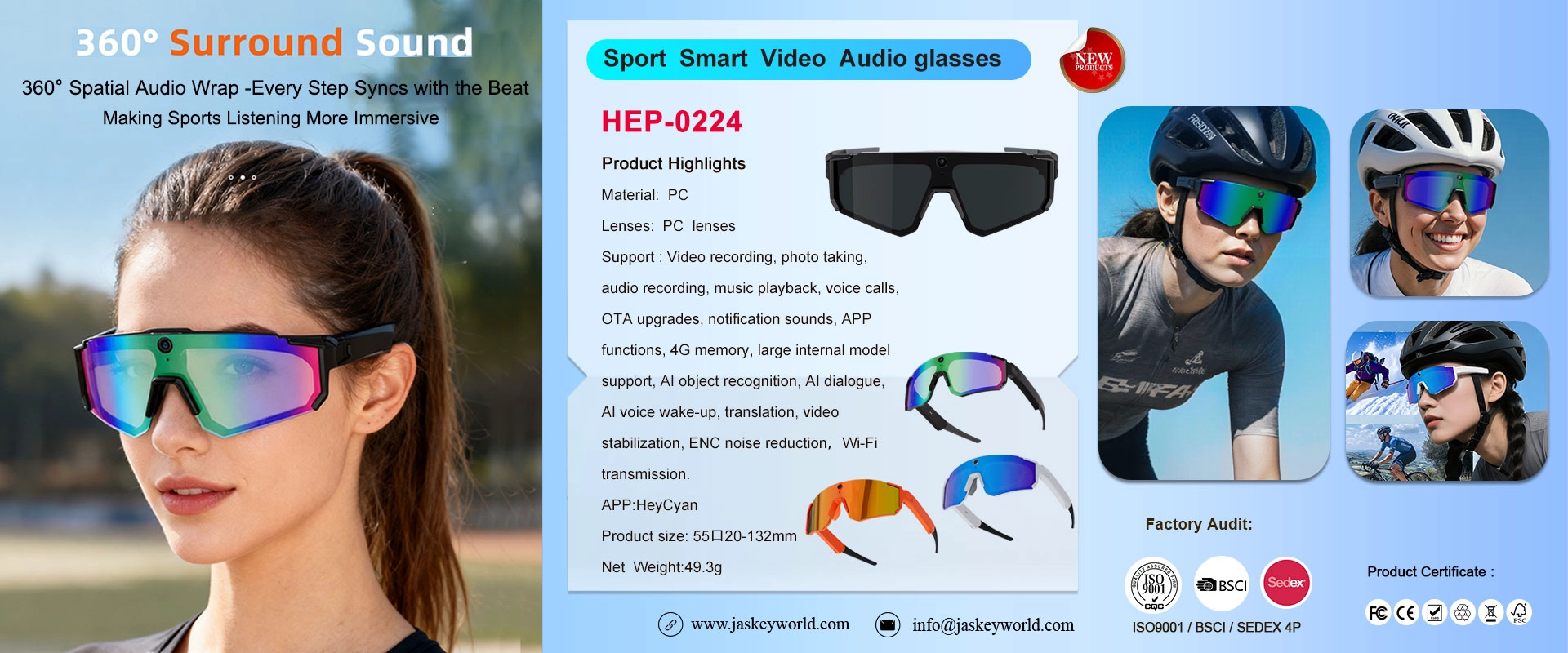
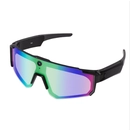
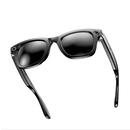
By combining first-person video recording, photography, wireless audio, voice communication and AI-powered functions within a familiar glasses format, products such as the HEP-0224 Sport Smart Video Audio Glasses reflect the growing convergence of wearable technology, digital content and intelligent interaction.
For consumer electronics brands, distributors, retailers and cross-border e-commerce sellers, the category is becoming increasingly relevant. The opportunity is not simply to add more functions to a wearable device. Instead, the commercial value lies in creating a product experience that connects technology with real usage scenarios.
From sports recording and travel content to AI-assisted communication and hands-free audio, smart glasses are opening new possibilities for product differentiation.
1. Industry Trends: Consumers Are Moving Toward Experience-Driven Wearables
One of the most important trends in consumer electronics is the transition from specification-driven products to experience-driven products.
Consumers still care about battery life, connectivity and audio quality, but these features are increasingly seen as expected fundamentals. The products that stand out are often those that create new or more convenient ways to interact with technology.
Smart glasses fit naturally into this shift.
Unlike smartphones, cameras or headphones that require users to hold, wear or operate separate devices, smart video audio glasses can combine several functions in one wearable product. Users can record video, take photos, listen to music, answer voice calls and interact with AI while keeping their hands free.
This is particularly relevant for sports, outdoor activities and travel.
First-person video has become an important content format because it provides a more immersive perspective. Consumers are already familiar with POV content through short-video platforms, action cameras and social media. Smart glasses can make this type of content easier to capture during cycling, hiking, walking, traveling or other everyday activities.
At the same time, artificial intelligence is expanding the role of smart wearables. Features such as AI voice wake-up, AI dialogue, object recognition and translation can provide more interactive experiences than traditional Bluetooth audio devices.
The combination of AI and wearable technology is also changing how brands approach product development. Instead of positioning smart glasses only as an accessory, companies can develop products around specific consumer scenarios, such as travel assistance, sports recording, lifestyle content or hands-free communication.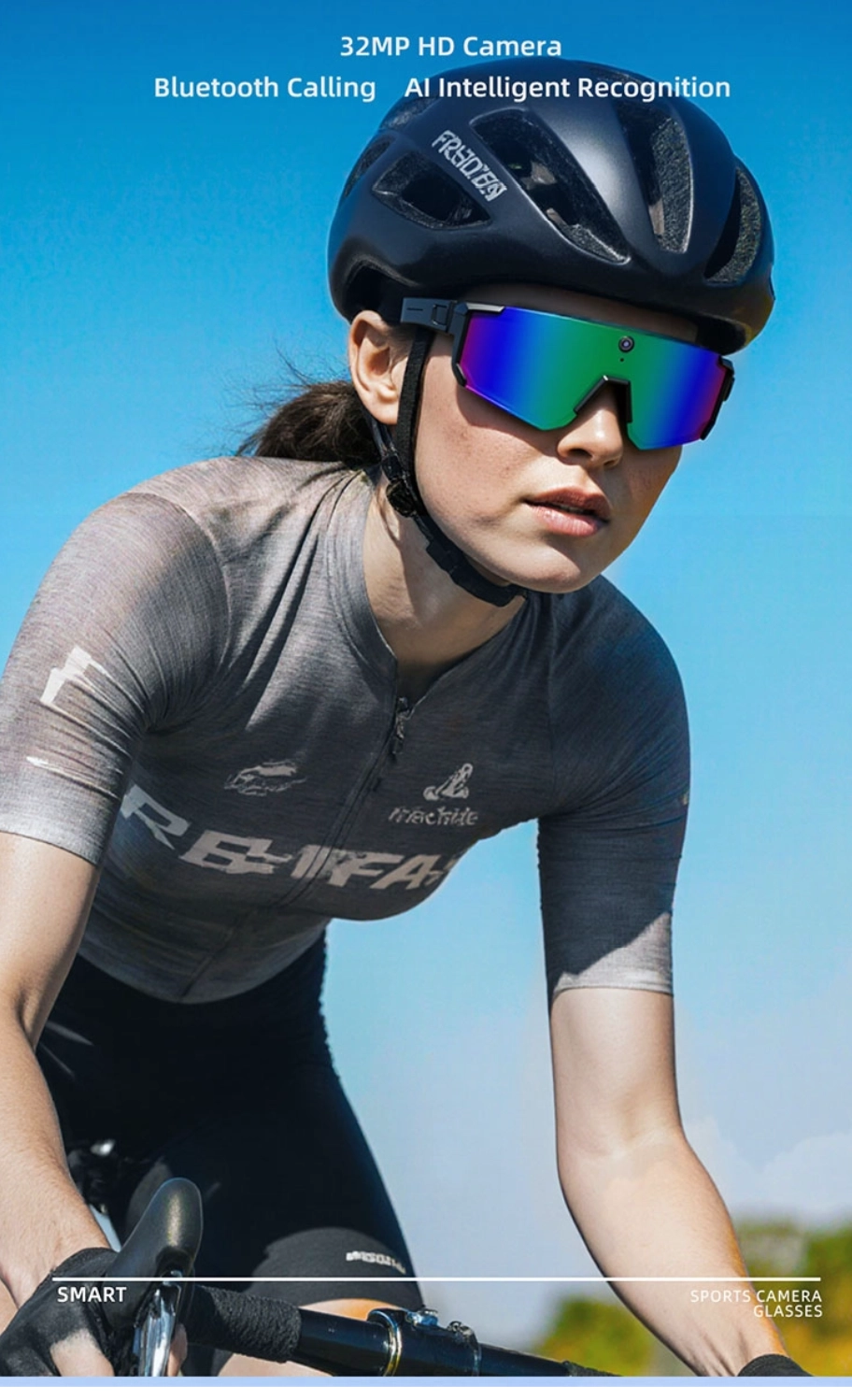
2. Product Design Trends: Smart Technology Must Also Be Comfortable
As smart glasses become more feature-rich, product design becomes increasingly important.
Consumers do not necessarily want wearable devices that look overly technical or complicated. The future of the category depends partly on how effectively manufacturers can integrate cameras, microphones, speakers, wireless modules and batteries into a comfortable and practical design.
This creates a new challenge for smart glasses manufacturers.
A successful product must balance functionality with weight, comfort, appearance and usability. The materials, frame structure, lens design and component layout all influence the final user experience.
For example, a PC-based frame and PC lenses can support a lightweight and durable product concept while allowing manufacturers to develop different styling options for target markets.
Connectivity is also evolving. Bluetooth 5.4 can support stable wireless communication, while Wi-Fi transmission can improve the transfer of recorded content. Mobile applications also play an increasingly important role in product ecosystems, providing users with functions such as device control, software updates and feature management.
OTA upgrade capability is particularly valuable in the smart wearable category because products can continue to improve after launch through software optimization and feature updates.
For brands, this means hardware development should increasingly consider the long-term software experience rather than focusing only on initial product specifications.
3. Social Media and Short-Video Commerce Are Creating New Product Opportunities
TikTok, YouTube Shorts, Instagram Reels and other short-form content platforms are influencing how consumer electronics products are discovered and evaluated.
Products that can demonstrate their value visually often have an advantage.
Smart video glasses are particularly suitable for this environment because the product itself can become a content creation tool. First-person video can demonstrate sports activities, travel experiences, outdoor adventures and everyday moments from a perspective that traditional smartphone content cannot easily replicate.
This creates opportunities for brands to combine product marketing with user-generated content.
Instead of relying only on traditional product advertisements, brands can encourage creators and consumers to demonstrate real-life usage scenarios. A short video showing hands-free recording, AI translation or voice interaction can communicate product functionality more directly than a long technical specification sheet.
For cross-border e-commerce sellers, platforms such as Amazon, TikTok Shop and independent Shopify stores also provide opportunities to test niche positioning.
Different versions of smart video audio glasses can potentially target different consumer groups, including outdoor enthusiasts, travelers, cyclists, technology consumers and digital content creators.
4. Market Pain Points: Innovation Must Go Beyond Feature Stacking
Although the smart wearable market presents significant opportunities, product development also faces several challenges.
One of the biggest is product homogeneity.
As more brands enter the wearable electronics market, similar Bluetooth functions, camera capabilities and AI features may become increasingly common. Competing only through price can quickly reduce margins and make long-term brand development more difficult.
Another challenge is feature integration.
Adding video recording, photography, music playback, voice calls, audio recording, AI functions and mobile applications creates a more complex product ecosystem. If these features are not integrated smoothly, the user experience can become confusing.
For this reason, brands need to identify their core product value before development begins.
A product designed primarily for sports may prioritize video stabilization, ENC noise reduction and hands-free operation. A travel-oriented model may focus more heavily on AI translation and voice interaction. A lifestyle-focused product may place greater importance on design, audio performance and social content creation.
Clear positioning can help reduce unnecessary feature stacking and create stronger differentiation.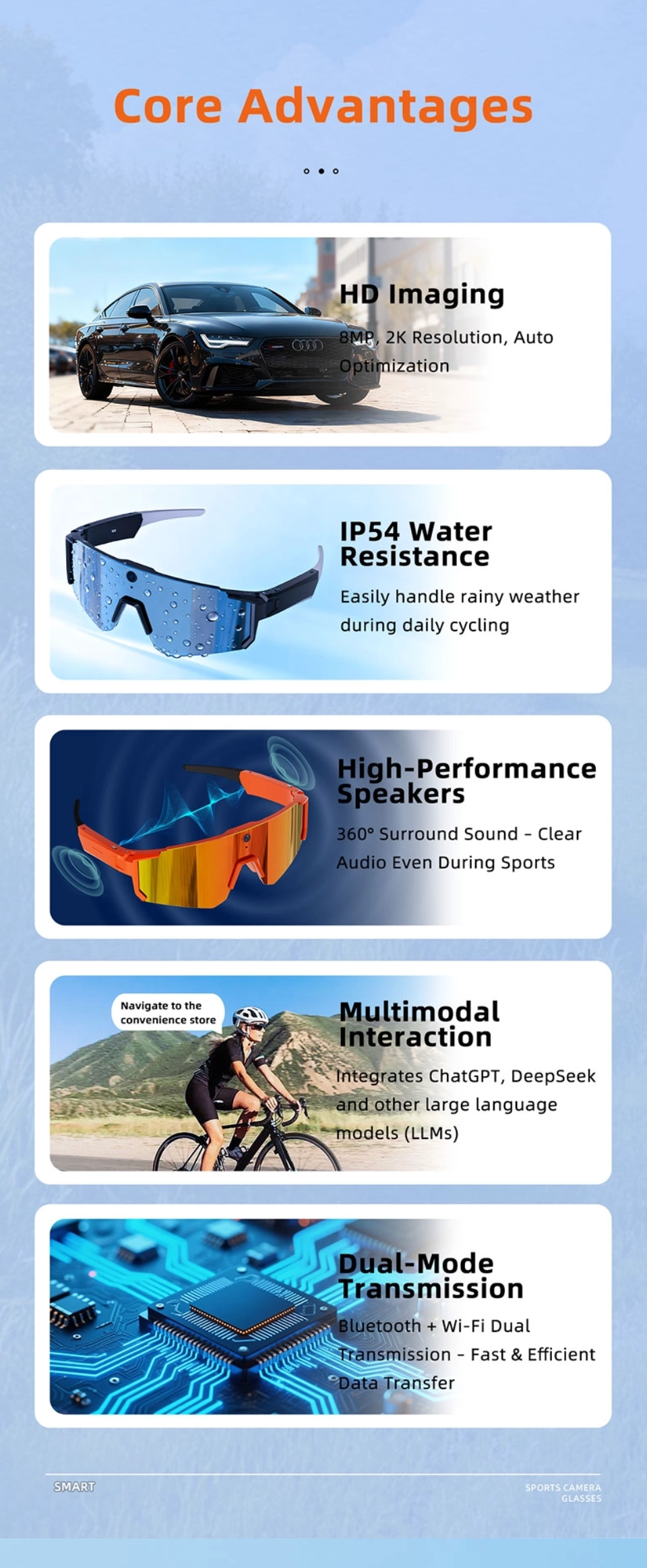
5. Market Opportunities: From AI Interaction to Private-Label Wearables
The expansion of AI functionality is creating new opportunities for brands that want to enter the smart wearable category.
AI object recognition, dialogue and voice wake-up can potentially support more natural interaction between users and devices. Translation functions can also increase the relevance of smart glasses in international travel and cross-border markets.
Meanwhile, first-person video continues to support demand for new content creation formats.
The combination of AI, video and audio creates opportunities for products that sit between traditional Bluetooth audio devices, action cameras and smart wearable technology.
This also creates room for OEM, ODM and private-label smart glasses projects.
Rather than developing an entirely new technology platform from the beginning, brands can work with experienced manufacturers to adapt existing product platforms through industrial design, feature selection, software configuration, branding and packaging.
For distributors and retailers, the category can provide opportunities to expand beyond conventional Bluetooth speakers and headphones into higher-value wearable technology segments.
6. Manufacturer Capability: From Product Concept to Global Market Adaptation
The development of smart video audio glasses requires more than standard consumer electronics manufacturing.
It involves product research, hardware integration, industrial design, software coordination and supply chain management.
For an OEM/ODM manufacturer, rapid product development capability can help brands respond to emerging trends and shorten the path from product concept to market-ready solutions.
Industrial design is especially important because smart glasses must combine electronics with everyday comfort and appearance. Product developers need to consider component integration, material selection, ergonomic structure and visual design at the same time.
Customization can also support different market strategies. Depending on the project, brands may require OEM branding, ODM product development, private-label packaging, customized functions or application-level adjustments.
A stable global supply chain is equally important for controlling component availability and managing production costs.
For international markets such as Europe, Japan, South Korea and Australia, manufacturers also need to consider differences in consumer preferences, retail channels and product expectations.
Companies with experience across Bluetooth speakers, headphones, audio glasses and other smart audio products may be better positioned to understand the technical relationship between wireless connectivity, audio performance, voice communication and wearable product design.
Conclusion: Smart Glasses Are Becoming a New Platform for Everyday Technology
The development of Sport Smart Video Audio Glasses reflects a broader change in consumer electronics.
Consumers are increasingly interested in products that are portable, intelligent, interactive and connected to real lifestyle scenarios. At the same time, AI, first-person video and short-form content are creating new reasons for consumers to explore wearable technology.
For brands, the future opportunity may not depend on offering the highest number of features. Instead, successful products are likely to focus on clear usage scenarios, comfortable design, reliable performance and meaningful user experiences.
As AI capabilities, video technology and wearable audio continue to develop, smart glasses may become an increasingly important category for consumer electronics brands, distributors and retailers.
For companies exploring new wearable product opportunities, collaboration around product development, OEM/ODM customization and market-specific positioning can provide a practical path toward building differentiated smart wearable products for global markets.