As wireless audio technology continues to evolve, consumer expectations are expanding beyond sound quality and battery performance. In recent years, bone conduction headphones have emerged as one of the fastest-growing segments in the wearable audio market, particularly in sports, fitness, and outdoor applications.
Among various categories, open-ear bone conduction swimming headphones are attracting increasing attention from retailers, distributors, and consumer electronics brands worldwide. Their combination of safety, comfort, waterproof capability, and active lifestyle compatibility aligns closely with changing consumer behavior across major global markets.
Current Industry Landscape: Bone Conduction Audio Moves into the Mainstream
Traditional in-ear earbuds continue to dominate the consumer audio market, but concerns regarding long-term comfort, situational awareness, and ear fatigue are creating opportunities for alternative listening technologies.
Bone conduction technology transmits sound vibrations through the cheekbones directly to the inner ear, leaving the ear canal open. This design allows users to remain aware of surrounding sounds while enjoying music, making it particularly attractive for runners, cyclists, hikers, and swimmers.
The growing popularity of fitness-focused consumer electronics has accelerated adoption. According to multiple industry reports, the global bone conduction headphone market is expected to maintain strong growth through the next several years, driven by increasing health awareness, outdoor sports participation, and demand for wearable technology.
For manufacturers and sourcing professionals, this trend presents significant opportunities within both branded retail and private-label product segments.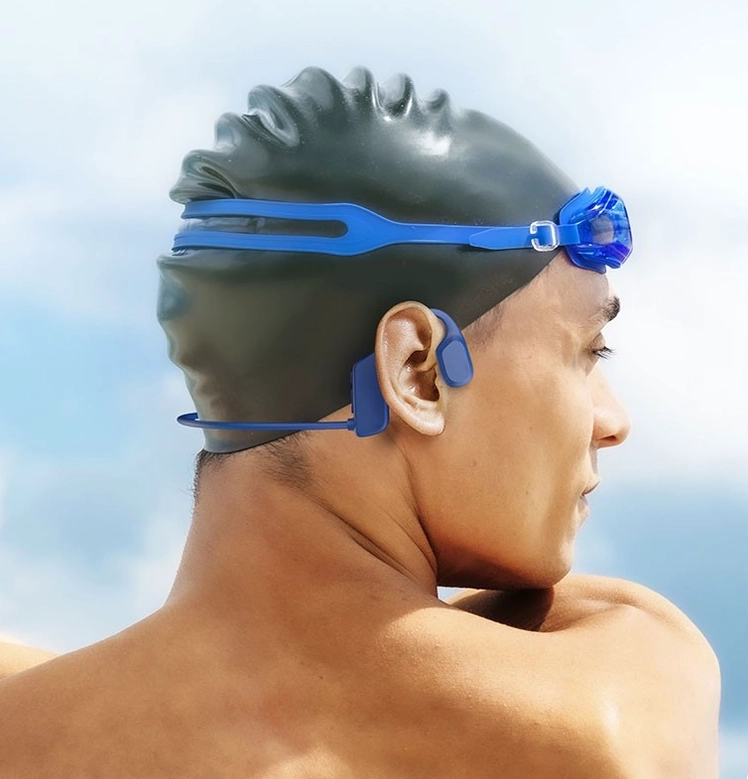
Market Trend Analysis: Why Open-Ear Swimming Headphones Are Gaining Momentum
Several market drivers are contributing to the rapid growth of open-ear swimming headphones.
1. Rising Demand for Sports and Fitness Electronics
Consumers increasingly view audio devices as fitness companions rather than simple entertainment products. Waterproof bone conduction headphones support activities such as:
- Swimming
- Running
- Cycling
- Hiking
- Gym workouts
- Triathlon training
Products equipped with IP68 waterproof protection and built-in MP3 storage are especially attractive because Bluetooth signals typically cannot transmit effectively underwater.
2. Open-Ear Design Enhances Safety
Safety has become a major purchasing consideration.
Unlike traditional earbuds that isolate users from environmental sounds, open-ear headphones allow athletes and commuters to remain aware of traffic, announcements, and surrounding activity. This feature has become a strong selling point in North America, Europe, Japan, and South Korea.
3. Multi-Function Integration Becomes Standard
Today's consumers increasingly expect multiple functions within a single device.
Modern bone conduction swimming headphones commonly combine:
- Bluetooth 5.2 connectivity
- IP68 waterproof performance
- Built-in MP3 player
- Internal memory storage
- Lightweight titanium frame construction
- Extended battery life
This trend is encouraging OEM and ODM manufacturers to develop more versatile products capable of serving multiple user scenarios.
Regional Market Demand Characteristics
Understanding regional buying behavior is essential for importers, distributors, and retailers planning product strategies.
Europe and North America
European and North American consumers prioritize:
- Product safety
- Waterproof performance
- Comfort during long workouts
- Brand reliability
- Environmental compliance
Swimming, running, and outdoor sports are highly popular across these regions, creating steady demand for premium bone conduction products.
Retailers often seek private-label solutions with customized packaging, branding, and certification support. Products featuring titanium alloy structures and durable waterproof construction are particularly attractive in these mature markets.
Japan and South Korea
Consumers in Japan and South Korea tend to focus on:
- Innovative technology
- Lightweight design
- Premium aesthetics
- User experience
Open-ear audio products align well with the region's appreciation for advanced wearable technology.
Compact designs, stable Bluetooth connectivity, and comfortable long-term wear are important purchasing factors. Demand for stylish fitness electronics continues to grow among younger consumers and active professionals.
Emerging Markets
In Southeast Asia, the Middle East, Latin America, and parts of Africa, the market is experiencing rapid expansion.
Consumers are becoming more receptive to affordable wearable technology while local distributors seek differentiated audio products with strong profit potential.
Competitive pricing, reliable quality, and flexible OEM customization are often key factors influencing purchasing decisions in these markets.
Compliance and Certification Requirements
As global regulations become increasingly stringent, compliance is no longer optional.
Importers and wholesalers should ensure that products meet applicable certification requirements before entering target markets.
Common certifications include:
- CE Certification (Europe)
- RoHS Compliance
- REACH Compliance
- FCC Certification (United States)
- UKCA Certification (United Kingdom)
- KC Certification (South Korea)
- PSE Certification (Japan)
- Battery Transportation Certifications
In addition, growing sustainability initiatives are encouraging buyers to evaluate supplier quality systems, environmental management practices, and long-term manufacturing capabilities.
Working with experienced manufacturers can help reduce compliance risks and accelerate product launch timelines.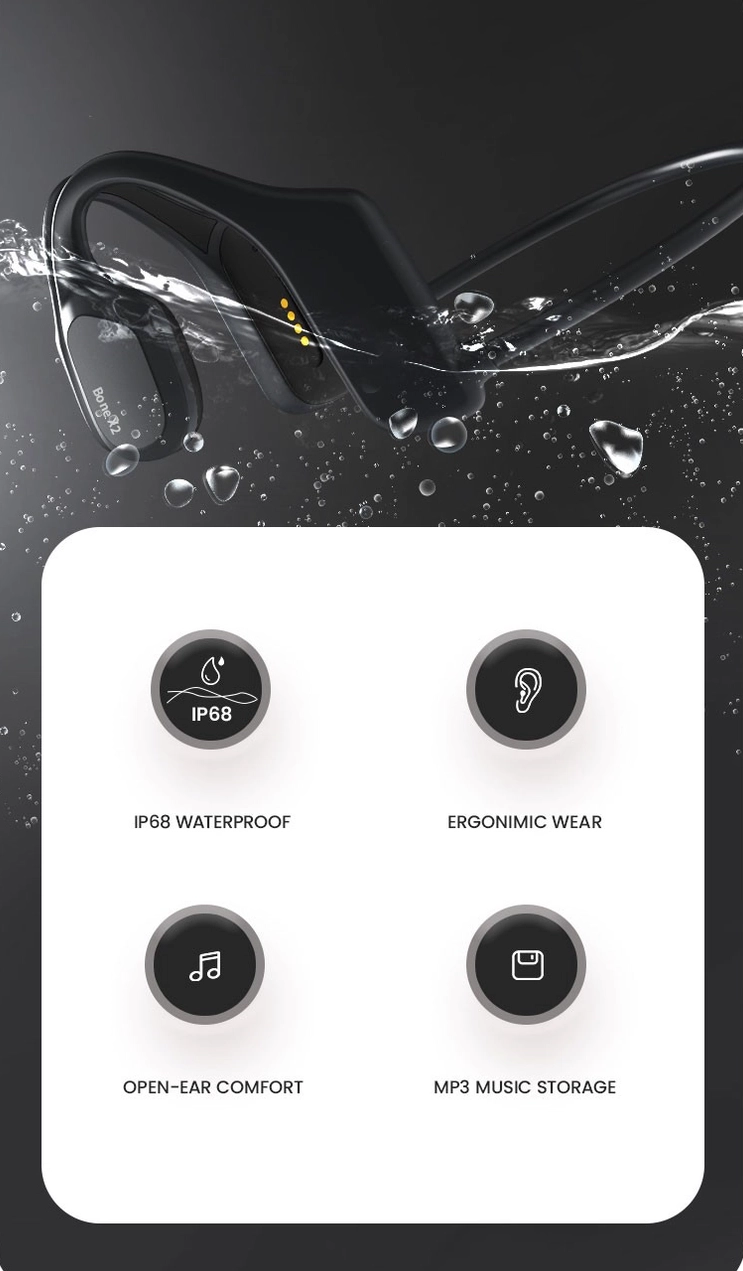
Recommendations for Importers, Wholesalers, and Retail Buyers
When sourcing bone conduction swimming headphones, buyers should look beyond price alone.
Key evaluation criteria include:
Product Performance
Verify waterproof ratings, Bluetooth stability, battery life, and audio quality under real-world usage conditions.
Manufacturing Capability
Choose suppliers with in-house R&D, industrial design expertise, and stable production capacity to support future product upgrades.
Customization Support
Private-label opportunities remain strong in the audio sector. Suppliers capable of offering logo customization, packaging design, and ODM development can help brands differentiate themselves.
Market Adaptability
Select products that address multiple consumer scenarios rather than a single use case. Devices combining Bluetooth connectivity, IP68 protection, and built-in MP3 memory often have broader market appeal.
For example, modern open-ear swimming headphones featuring Bluetooth 5.2, IP68 waterproof performance, titanium alloy construction, and 8GB MP3 storage can serve both swimming enthusiasts and general fitness users, expanding potential sales channels.
Looking Ahead
The global bone conduction headphone industry is entering a new stage of growth driven by fitness lifestyles, wearable technology adoption, and increasing consumer awareness of safety and comfort.
As open-ear audio products continue to evolve, retailers, distributors, and consumer electronics brands that identify emerging trends early will be better positioned to capture market opportunities.
For sourcing professionals, the key challenge is no longer whether bone conduction headphones will grow, but which product features and supplier partnerships will deliver the strongest long-term competitive advantage.
What features do you believe will define the next generation of bone conduction swimming headphones? Contact us to discuss your market requirements and explore OEM/ODM opportunities for your brand.